Host Plant:
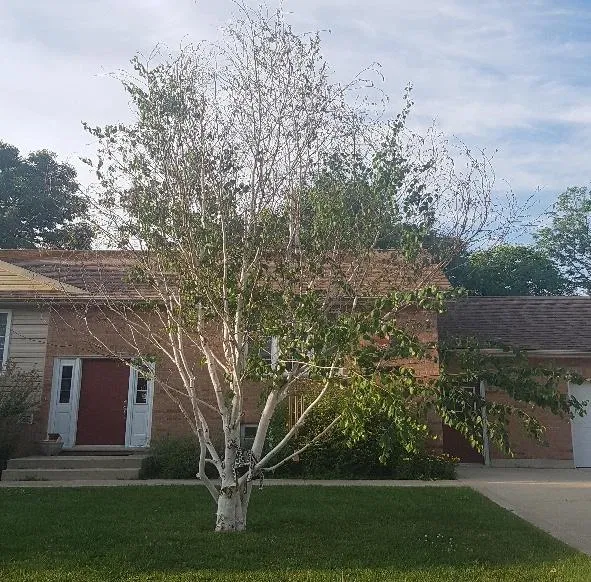
All native and introduced Birch (Betula) species in Canada.
Damage:
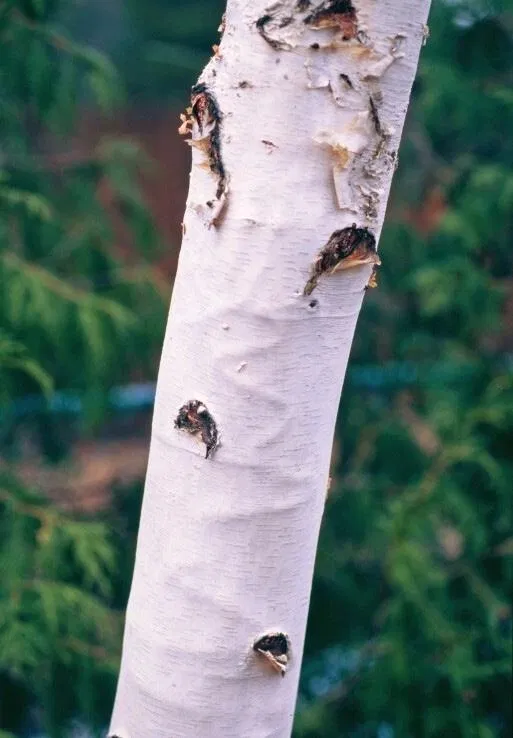
Adult bronze Birch borers feed on leaves in the upper canopy causing little noticeable damage. The larvae create feeding galleries under the bark with in the phloem and xylem of the branches and the main stem of the tree, disrupting the movement of water and nutrients. Tunnels bored by the larvae feeding beneath the bark create noticeable raised areas on the branches. When larvae have completed their life cycle, they emerge from the tree leaving a ‘D’ shaped exit hole.
Description and Lifecycle:
Adult bronze Birch borers are slender and olive to copper bronze beetles ranging from 6 to 12 millimetres in length. There is on generation per year in the southern portions of there range, two years are required to complete development in cooler regions or in vigorous trees. Adults emerge during a 6-week period from May to July and feed on the leaves before laying eggs. Eggs are laid singly or in clusters in bark crevices, often where small branches meet the main stem.
Control Measures:
Pruning dead branches and removing heavily infested trees to reduce local populations. Fertilization in the spring to improve vigor and an injection in the spring of a registered insecticide to control the larvae.
CALL SHADY LANE EXPERT TREE CARE TO PROVIDE RECOMMENDATIONS