
BEECH LEAF DISEASE
HOST PLANTS:
Beech leaf disease is found in forests with American beech (Fagus grandifolia) and in plantings of European (sylvatica), Oriental (Fagus orientalis), and Chinese (Fagus engleriana) beech in North America.
DAMAGE: First detected in Ontario in 2017, the disease is present along the shore of Lake Erie and in Toronto. The disease causes leaf deformity in beech trees of all ages. Young trees die as a direct result of this disease.
DESCRIPTION AND LIFECYCLE:
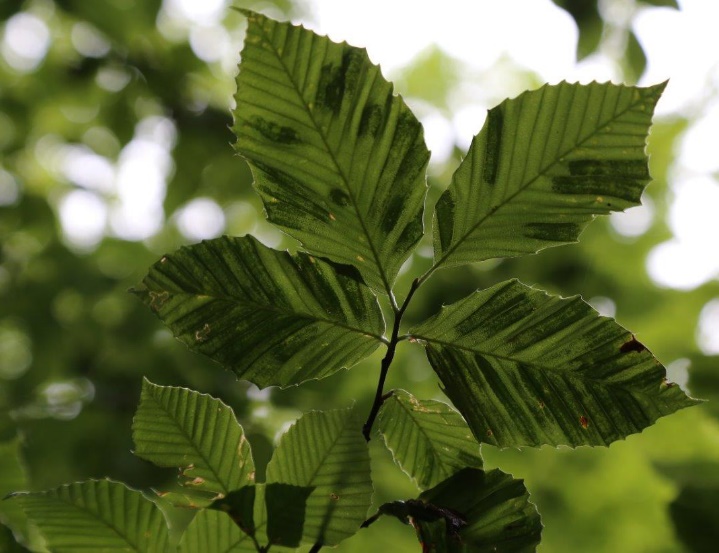
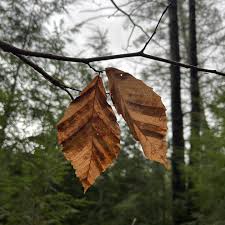
Nematodes are present in leaves before symptoms occur. Nematodes feed on leaf tissue between veins, causing leaf damage. Nematode numbers increase from spring to fall, and they overwinter in buds and leaf litter. How the nematode is spread is unknown, and research is underway; other nematodes are spread by mites, insects, animals, and in infected plant material. Early symptoms are dark-green stripes or bands between the lateral veins of leaves. Severe symptoms include thickened or leathery leaves that may be yellow, curled, or deformed; leaves may drop early, and buds may not develop. Sapling-sized trees may die within two to five years, with older trees taking longer to show effects. Infected trees can be more susceptible to other pathogens.
CONTROL MEASURES:
The nematode thought to cause beech leaf disease can unintentionally be spread to non-infested forested areas. To stop the spread, do not move beech seedlings, leaf litter, or firewood. Clipping in the dormant season (late fall/winter), focusing on removing the most symptomatic branches. Shady Lane offers 2 different types of treatments to control this nematode.
CONTACT SHADY LANE EXPERT TREE CARE FOR TREATMENT OPTIONS