
HOST PLANTS: Boxwoods
DAMAGE: Boxwood blight, caused by a fungus, is a devastating disease affecting boxwood plants.
First identified in the mid-1990s, this pathogen has since spread across regions, becoming a major concern for gardeners, landscapers, and horticulturists alike. The disease thrives in warm and humid conditions, making it particularly problematic during periods of damp weather.
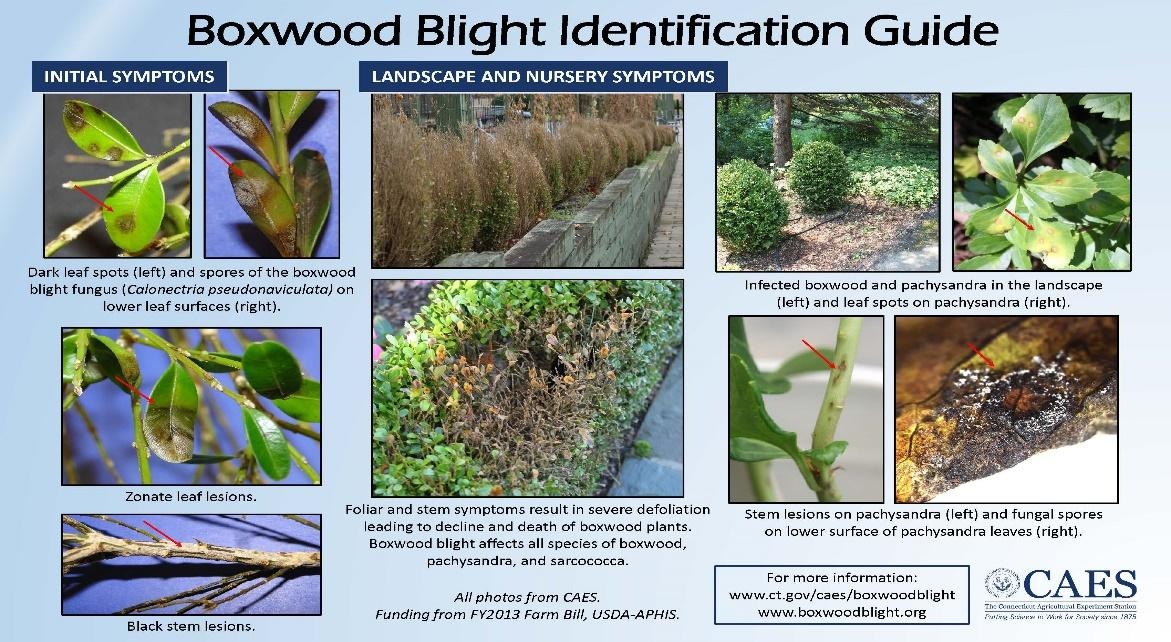
DESCRIPTION AND LIFECYCLE: The symptoms of boxwood blight are a complex blend of subtlety and severity, making early detection a critical aspect of management. The disease exhibits a range of symptoms, ranging from minor to severe, which underscores the challenge of diagnosis. Initially, small dark spots appear on leaves, accompanied by elongated lesions. Over time, these spots expand, developing into larger, irregular lesions that turn brown or straw-colored. The infection progresses, leading to leaf drop, branch dieback, and cankers on stems. The contrast between the healthy and infected foliage, is a hallmark of boxwood blight.
CONTROL MEASURES: Preventing boxwood blight demands a multifaceted approach that encompasses cultural practices, careful plant selection, and vigilant maintenance. By employing a diversity of strategies, will prevent the fungus from adapting and thriving.
CONTACT SHADY LANE EXPERT TREE CARE FOR TREATMENT OPTIONS